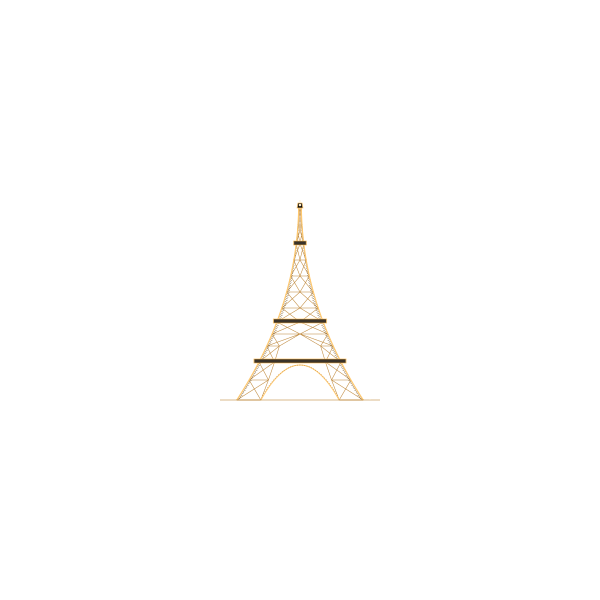
Eiffel Tower
Seven thousand tonnes of puddled iron, so light for its size that its metal melted down would make a slab six centimetres thick.
Gustave Eiffel's company built the tower for the 1889 World's Fair in Paris, which marked the centenary of the French Revolution. It stood 312 metres tall on completion and remained the tallest structure in the world until New York's Chrysler Building in 1930. Antennas added over the years have taken it to about 330 metres, most recently in 2022.
It was assembled from about 18,000 wrought-iron parts held together by some 2.5 million rivets. The iron structure weighs about 7,300 tonnes. That is light for its size: melt all the metal into a slab covering the tower's 125-metre-square base and it would be only about six centimetres thick.
Many leading artists and writers signed a protest against the tower in 1887, and it was meant to stand for only twenty years. Its value as a radio transmitter saved it. The iron expands in summer sunshine, so the top moves by several centimetres, leaning away from the warmer side.
The tower is repainted roughly every seven years, using about 60 tonnes of paint. On this scale it is about thirteen blue whales tall, and Mount Everest, the next stop, rises as high as some twenty-seven Eiffel Towers stacked one on another.
- Size
- 3.3 × 10² m
- Completed
- 1889
- Iron structure
- about 7,300 t
- Rivets
- about 2.5 million