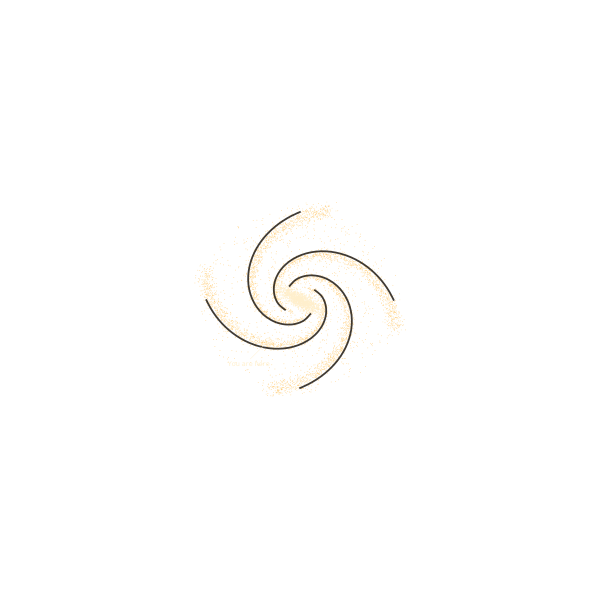
Milky Way
Our galaxy is a barred spiral about 100,000 light years across, and the Sun takes some 230 million years to circle it once.
The Milky Way's main disc of stars is about 100,000 light years in diameter, though some estimates run higher, and a faint halo of old stars and dark matter extends much farther. The disc is thin: only about 1,000 light years thick near the Sun, so in proportion it is about as flat as a compact disc.
It holds somewhere between 100 and 400 billion stars. The Sun lies about 26,000 light years from the centre, in a minor spiral arm called the Orion Spur, named after the constellation where the Orion Nebula sits. At the centre is Sagittarius A*, a black hole of about 4 million solar masses, imaged by the Event Horizon Telescope in 2022.
Every star you can see with the naked eye belongs to the Milky Way, and the pale band across a dark sky is the disc seen edge-on from inside. Most of the galaxy's mass, however, appears to be dark matter, detected only through its gravity.
The Sun orbits the centre at about 230 km/s, completing one lap in some 230 million years. The last time it was at this point in its orbit, the first dinosaurs were appearing. The Milky Way is the second largest galaxy in the Local Group, the next stop, after Andromeda.
- Size
- 9.5 × 10²⁰ m
- Stars
- about 100–400 billion
- Central black hole
- about 4 million Suns
- Age
- about 13 billion years