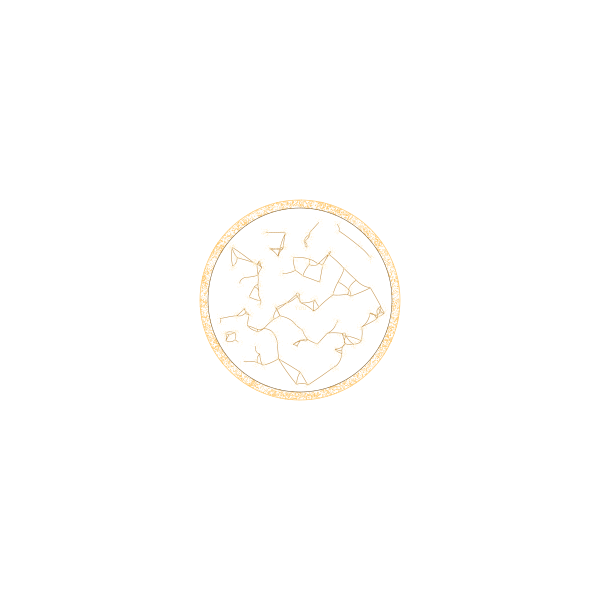
Observable universe
The edge is a horizon in time, not a wall: the farthest light we can catch has been travelling for 13.8 billion years.
The observable universe is the sphere around us from which light has had time to arrive since the Big Bang, about 13.8 billion years ago. You might expect it to be 27.6 billion light years across, but space has been expanding while that light travelled, so the places that emitted it are now about 46 billion light years away. The diameter is about 93 billion light years, or 8.8 × 10²⁶ metres.
The oldest light we can see is the cosmic microwave background, released about 380,000 years after the Big Bang, when the universe had cooled enough for atoms to form. Mapped in detail by ESA's Planck satellite, it carries tiny temperature ripples, about one part in 100,000, that seeded every galaxy and cluster on this scale.
It holds hundreds of billions of galaxies, perhaps as many as two trillion by one estimate. The whole universe is probably far larger, possibly infinite; this horizon only marks how far we can see, and it is centred on us simply because we are the ones looking.
From the quark at the foot of this scale to here spans at least 44 powers of ten. You, at 1.7 metres, sit about 18 of them above the quark and nearly 27 below this horizon: a little nearer the small end.
- Size
- 8.8 × 10²⁶ m
- Age
- about 13.8 billion years
- Radius
- about 46.5 billion ly
- Galaxies
- hundreds of billions