Laniakea Supercluster
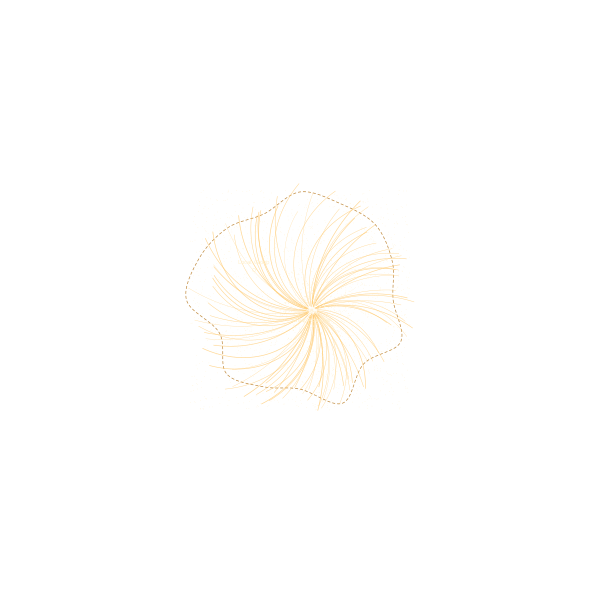
Defined not by a boundary but by flow: every galaxy within it is drifting towards the same gravitational basin.
In 2014 a team led by R. Brent Tully of the University of Hawaii mapped the motions of thousands of galaxies and drew a new boundary around our corner of the universe. They called it Laniakea, a Hawaiian name meaning immeasurable heaven.
It is about 520 million light years across and contains around 100,000 galaxies, with a total mass of about 10¹⁷ Suns. The Local Group, the Virgo Cluster and the dense region near the Norma Cluster known as the Great Attractor all lie within it. Some five thousand Milky Ways would fit across it.
Superclusters are hard to bound, because galaxies blend smoothly into the filaments and sheets of the cosmic web. Tully's team defined Laniakea by the direction galaxies move once the expansion of the universe is subtracted: inside the boundary they flow towards a common centre near the Great Attractor, while outside they flow towards other basins. It is like dividing a landscape into river catchments according to where the rain runs.
Laniakea is not held together for good. Cosmic expansion will eventually pull its parts away from one another. The observable universe, the last stop on this scale, is about 180 times wider.
- Size
- 4.9 × 10²⁴ m
- Galaxies
- about 100,000
- Mass
- about 10¹⁷ Suns
- Identified
- 2014