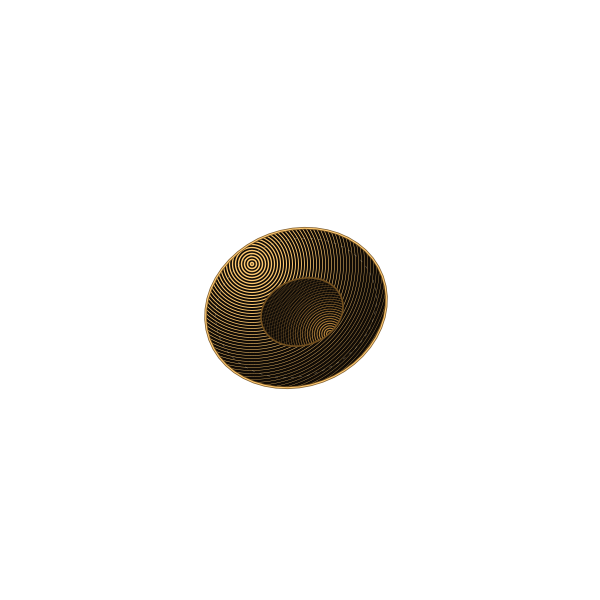
Red blood cell
A dimpled disc with no nucleus, built to carry oxygen and squeeze through capillaries narrower than itself.
A human red blood cell is a disc about 7.5 micrometres across and 2 micrometres thick, thinner in the middle than at the rim. This biconcave shape gives it a large surface for oxygen to cross and lets it bend almost double to pass through capillaries only about 5 micrometres wide, and sometimes less.
To make room for cargo, a mammalian red cell throws out its nucleus and most of its internal machinery as it matures. What remains is packed with about 270 million molecules of haemoglobin, each able to carry four molecules of oxygen. The iron in haemoglobin is what makes blood red.
You have about 25 trillion of them, by count the great majority of the cells in your body. Laid side by side they would stretch some 190,000 kilometres, about half the distance to the Moon. Each lasts around 120 days before it is recycled in the spleen and liver, so your bone marrow makes roughly two to three million new ones every second.
On this scale a red blood cell is a useful middle step. About four E. coli bacteria laid end to end match its width, and about ten red cells side by side span the width of a human hair, the next stop.
- Size
- 7.5 × 10⁻⁶ m
- Thickness
- about 2 µm
- Lifespan
- about 120 days
- Haemoglobin per cell
- about 270 million